SYSTEM / UGV-01 SECTION / HERO X 000 Y 000
00Main Page 01About 02Skills 03Projects 04Exposure 05Education 06Contact
HI, I'M GUNA SAI

MECHANICAL ENGINEER

↓ SCROLL TO SCRUB TIMELINE
NIT DELHI // CAD & AI
ACADEMIC CGPA 8.04
TURNING IDEAS INTO ENGINEERING REALITY

B.Tech Mechanical Engineering undergraduate at NIT Delhi, minoring in AI/ML. Specializing in CAD geometry, powertrain sizing, and computational mechanical systems.

8.04CGPA / 10.0
TOP 2%JEE MAIN
2028GRADUATION
// UGV-01 CAD TELEMETRY REVIEW
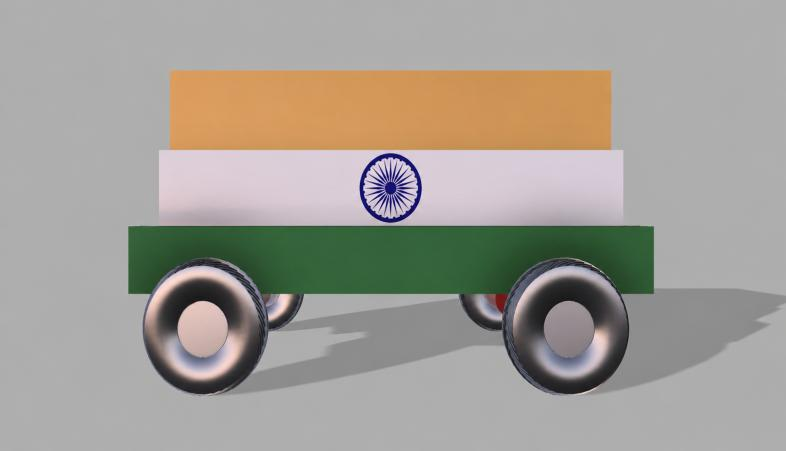
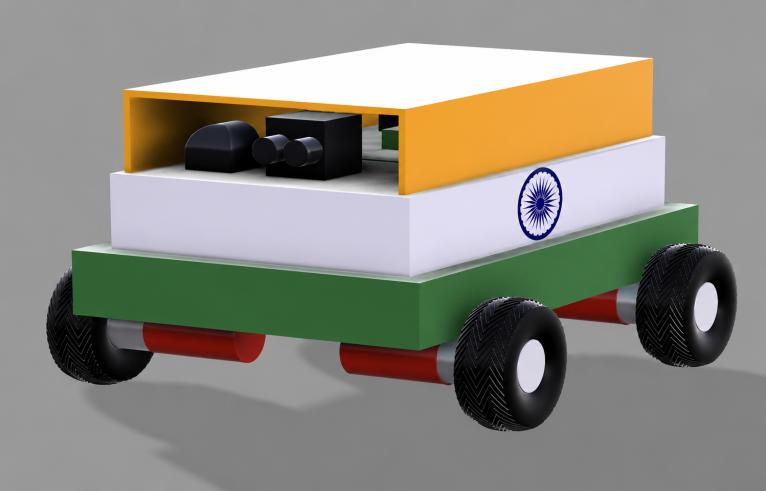
CAD 3D Isometric View
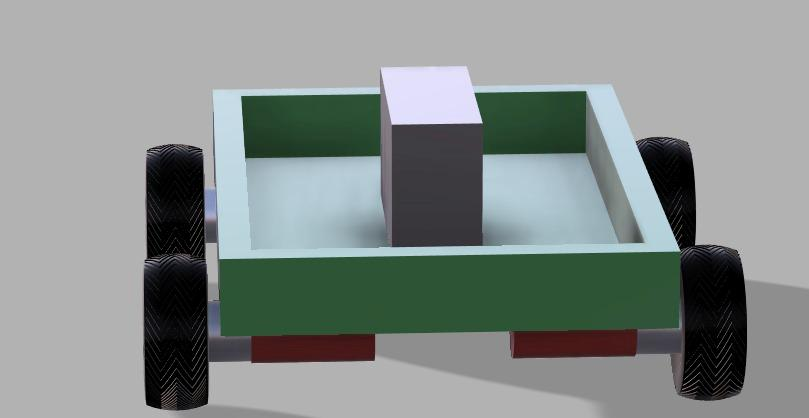
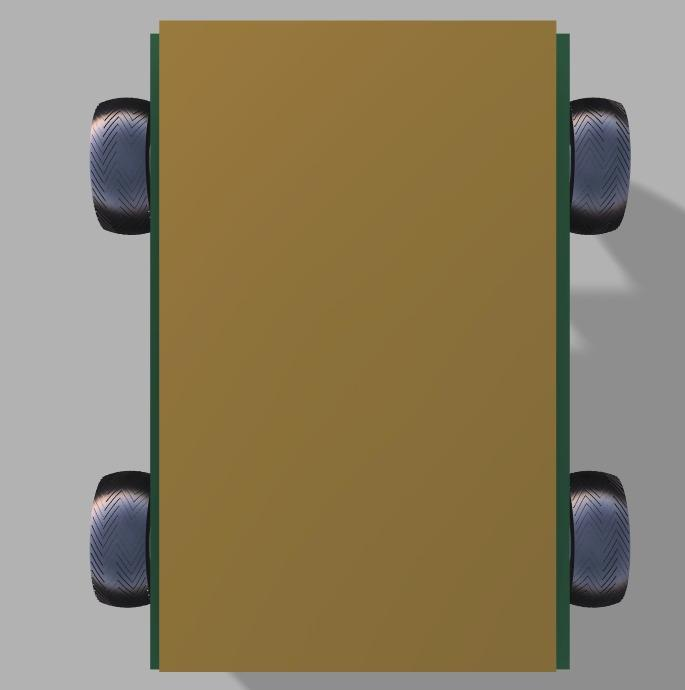
CAD Top Plan View
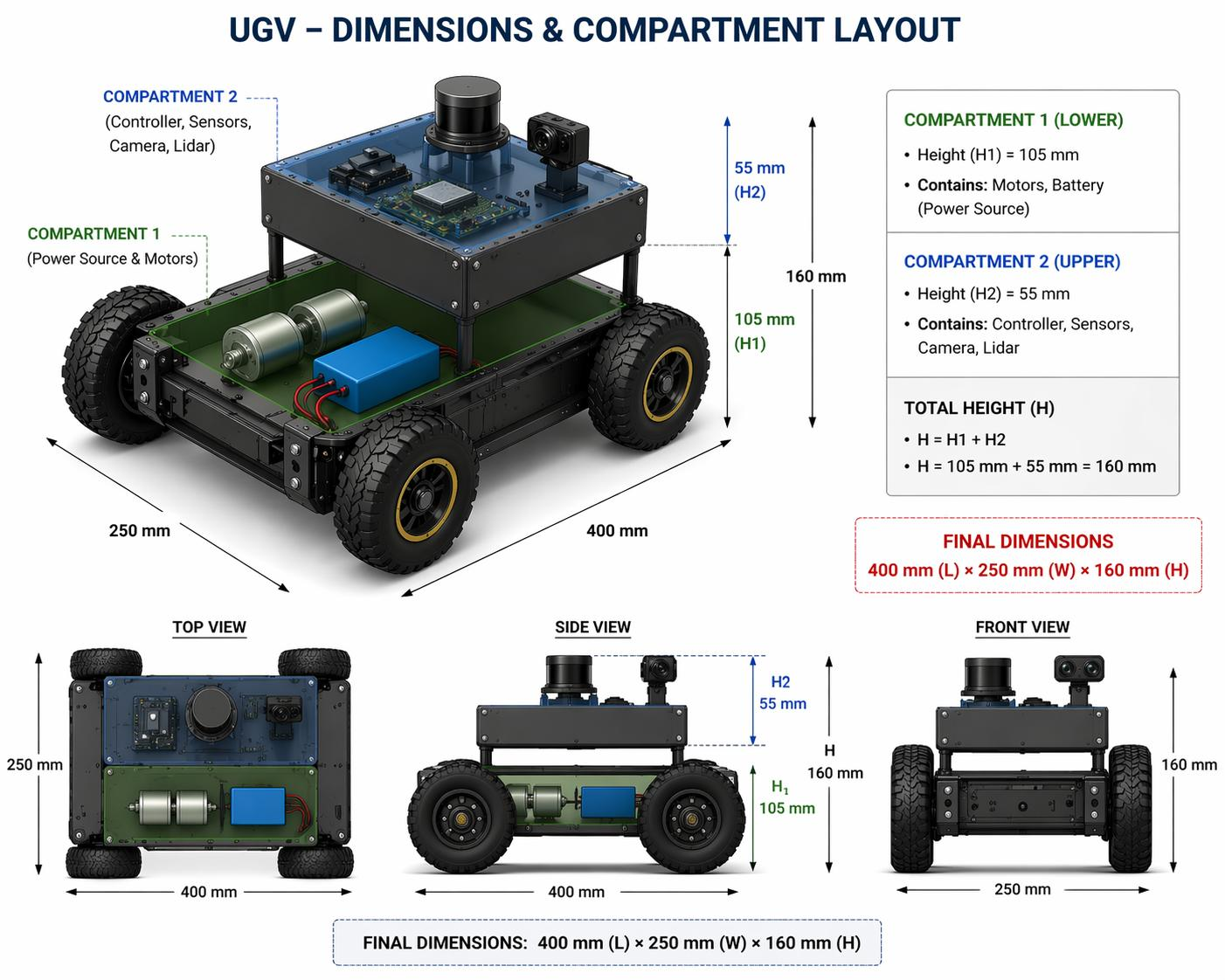
CAD Dimension Blueprint
ENVELOPE (L×W×H)400×250×160 MM
TOTAL MASS7.74 ≈ 8.0 KG
MATERIALAl 7075-T6 ALLOY
DRIVETRAIN4WD DIFFERENTIAL
FUSION 360 PARAMETRIC CAD VIEW FULL PROJECT SUITE →
FUSION 360CATIAPOWERTRAIN CALCULATIONSSHAFT DESIGNCAD MODELLINGPYTHONMACHINE LEARNINGTHEORY OF MACHINES FUSION 360CATIAPOWERTRAIN CALCULATIONSSHAFT DESIGNCAD MODELLINGPYTHONMACHINE LEARNINGTHEORY OF MACHINES
01ABOUT

Engineer,
problem solver.

PROFILE / MECHANICAL ENGINEERING UNDERGRADUATE

I approach mechanical problems the way a drawing approaches a part — dimension first, structure second, decoration never.

Currently in my second year of Mechanical Engineering at NIT Delhi, minoring in AI/ML. My work sits between CAD geometry and the calculations that justify it — chassis layouts, drivetrain sizing, load estimation — with a growing interest in applying computational methods to renewable-energy systems.

DISCIPLINE
Mechanical Engineering
SPECIALIZATION
Design / CAD / Systems
MINOR
AI / ML
INSTITUTE
NIT Delhi
CGPA
8.04 / 10.0
CAD TOOLS
Fusion 360 (Intermediate), CATIA (Beginner)
02TECHNICAL SKILLS

Specification
board.

FOUR CATEGORIES / CORE COMPETENCIES
01CAD & Design
Fusion 360CATIACAD/CAMEngineering DrawingMechanical Design
02Core Mechanical
Strength of MaterialsEngineering MechanicsThermodynamicsFluid MechanicsHeat TransferMachine DesignTheory of Machines
03Manufacturing & Systems
Manufacturing ProcessesMaterials ScienceIC EnginesIndustrial EngineeringPowertrain Design
04Computational
PythonMachine LearningEngineering Calculations
03PROJECTS

From concept
to calculation.

TWO CASE STUDIES / DESIGN + COMPUTATION
DEFENSE RECONNAISSANCE 4WD DIFFERENTIAL DRIVE BSF OPERATIONAL SPECIFICATION ALUMINIUM 7075-T6 CHASSIS

Unmanned Ground Vehicle (UGV)

AUTONOMOUS BORDER SURVEILLANCE & RECONNAISSANCE PLATFORM — TEAM OF 3
LEAD ROLE & CONTRIBUTION
End-to-end CAD geometry modeling in Fusion 360, packaging architecture, dynamic powertrain sizing, traction modeling, and shaft mechanical design.
CHASSIS ENVELOPE 400×250×160MM
TOTAL ALL-UP MASS 7.74 ≈ 8.0KG
TRACTION FORCE (35° INCLINE) 79.09N
SIZED MOTOR POWER 548.68W
STRUCTURAL MATERIAL Al 7075-T6ALLOY
Fusion 360 Parametric CAD Modeling & Packaging Architecture

Designed an ultra-rigid two-compartment chassis engineered to withstand harsh desert sand dunes and high-altitude Himalayan border environments. Features independent 4WD motor mounts, reinforced U-shaped wheel arms, and isolated telemetry decks.

4 ORTHOGRAPHIC & 3D VIEWS
❖ 3D Interactive Parametric Model & Exploded View
// 3D REAL-TIME PROJECTION ROTATION: X 24° Y -38° MODE: 3D ASSEMBLED
DRAG TO ROTATE 360° · TOGGLE CONTROLS ABOVE
📐 Two-Compartment Dimensional Architecture
CHASSIS WIDTH (W) 250 mm = Lmotor (80mm) + Wbattery (60mm) + Clearance (20mm)
CHASSIS LENGTH (L) 400 mm (Optimized for 4-wheel stability and obstacle straddling)
LOWER TIER HEIGHT (H1) 105 mm = max(Motor Ø, Battery Height) + Clearance
UPPER TIER HEIGHT (H2) 55 mm = max(Controller, LiDAR, IR, Camera deck)
TOTAL ENVELOPE (L×W×H) 400 × 250 × 160 mm  ·  Total Volume Vt = 1.897 × 10⁻³ m3
🛡️ Material Selection: Aluminium 7075-T6

Selected over mild steel and standard polymers due to its superior strength-to-weight ratio, exceptional yield strength, and natural corrosion resistance against sand abrasion.

YIELD STRENGTH 503 MPa (Yield safety margin > 4.0×)
ULTIMATE TENSILE 572 MPa
DENSITY (ρ) 2.81 g/cm³ (Frame mass: 5.14 kg)
ELASTIC MODULUS (E) 71.7 GPa (High deflection resistance)
First-Principles Powertrain Sizing & Sand Dune Traction Mechanics

Rigorous analytical derivations accounting for severe sand incline climb (Jaisalmer dunes, slope angle θ = 35°, coefficient of rolling resistance Crr = 0.30) to compute traction force, motor wattage, and shaft shear constraints.

ANALYTICAL DERIVATION + LIVE SIMULATOR
01. Frame Volume & Total Mass Breakdown MASS SIZING
V1 = [(l × b × t) + (h × b × t)] × 2 = 1.26 × 10⁻³ m³ V2 = 2(h × b × t) + (l × b × t) = 0.637 × 10⁻³ m³ Total Frame Volume (Vt) = V1 + V2 = 1.897 × 10⁻³ m³ mframe = ρ × Vt = 2710 × 1.897×10-3 = 5.14 kg mmotors (4x) = 1.2 kg  |  mbattery = 0.9 kg  |  msensors = 0.5 kg Total Operating Mass (mt) = 7.74 kg ≈ 8.00 kg

Every internal component was physically weighted and volume-budgeted to prevent chassis overload while maintaining low center of mass.

02. Sand Dune Incline Traction Dynamics FORCE BALANCE
Ftraction = Frolling + Fgradient + Finertial Frolling = Crr · mt · g · cos(35°) = 0.3 × 8 × 9.81 × cos(35°) = 19.80 N Fgradient = mt · g · sin(35°) = 8 × 9.81 × sin(35°) = 45.01 N Finertial = mt · a = 8 × 1.85 m/s² = 14.80 N Total Traction Required (Ftraction) = 19.8 + 45.01 + 14.8 = 79.09 N

Operational scenario assumes loose sand terrain in Jaisalmer with peak 35° sand dune gradient and 1.85 m/s² acceleration.

03. Motor Power & Output Torque Sizing POWER SIZING
Prequired = (Ftraction × v) / η At target v = 5.55 m/s (20 km/h) & transmission efficiency η = 0.80: Prequired = (79.09 × 5.55) / 0.8 = 548.68 W P = T × ω  (at rated wheel angular speed ω = 111 rad/s) Motor Torque (T) = 548.68 / 111 = 4.94 N·m Delivered Output Power (Pout) = 315.15 W  ·  Tout = 3.16 N·m

Enables selection of 4 independent high-torque brushed/brushless DC gearmotors delivering distributed 1.25 N·m per wheel hub.

04. Transmission Shaft Mechanical Design SHAFT SIZING
Torsional load per wheel shaft: τ = (rwheel × Ftraction) / 4 = (0.05 m × 79.09 N) / 4 = 0.988 N·m Minimum Shaft Diameter (d) from Maximum Shear Stress Theory: d = [ (16 · τ) / (π · Tout) ]1/3 Standardized Design Diameter (d) = 40 mm

Shaft diameter chosen with heavy safety margin to resist combined bending from rough terrain shocks and torsional wheel slip.

Live Dynamic Telemetry & Incline Force Simulator

Interact with the real-time engineering model. Adjust the terrain slope, all-up mass, and target velocity to observe dynamic force recalculations.

ACTIVE REAL-TIME ENGINE
// REAL-TIME INCLINE TRACTION & FORCE VECTOR BALANCE
Vehicle All-Up Mass (m) 8.0 kg
Incline Slope Angle (θ) 35° (Jaisalmer Dunes)
Target Patrol Velocity (v) 5.55 m/s (20.0 km/h)
Rolling Resistance Coeff (Crr) 0.30 (Loose Sand)
Transmission Efficiency (η) 80%
ROLLING RESISTANCE (Froll) 19.80 N
GRADIENT CLIMB FORCE (Fgrad) 45.01 N
ACCELERATION INERTIA (Finertial) 14.80 N
TOTAL TRACTION FORCE (Ftotal) 79.09 N
REQUIRED MOTOR INPUT POWER 548.7 W
TOTAL MOTOR TORQUE (@ ω=111 rad/s) 4.94 N·m
TORQUE PER WHEEL SHAFT 0.99 N·m
SIZED POWER CAPACITY UTILIZATION 73% OF 750W PEAK
ANSYS Structural FEA Simulation & Stress Analysis

Finite Element Analysis performed to validate chassis structural integrity under dynamic impact, full sand dune traction, and payload loading. Confirmed negligible elastic deformation and massive safety margins.

ANSYS MECHANICAL FEA
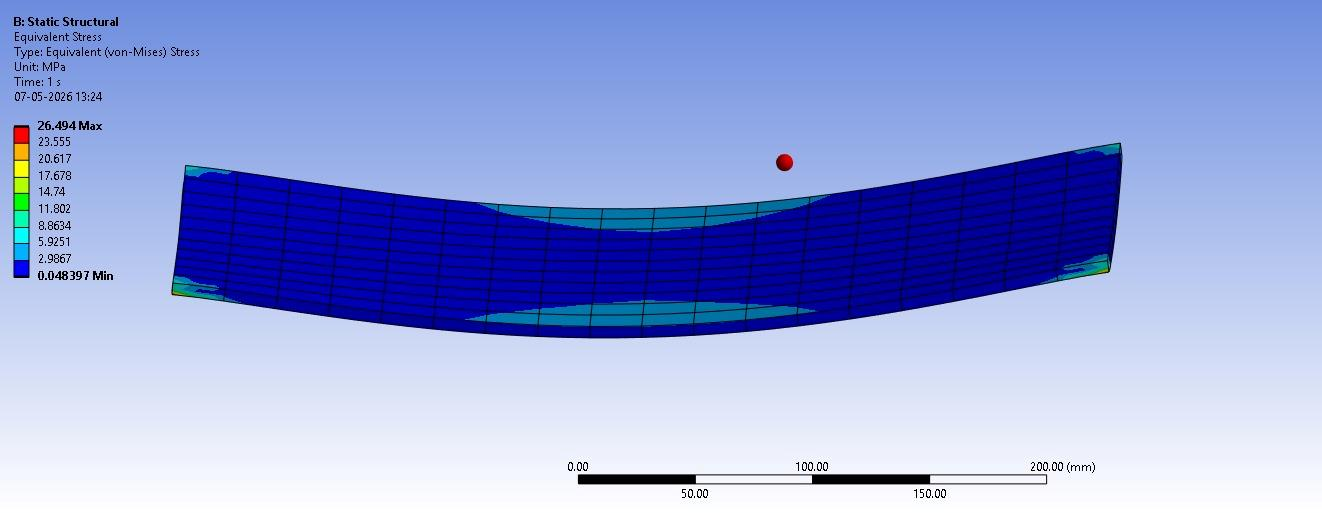
VON-MISES STRESS CONTOUR ANSYS Equivalent Stress Map CLICK TO EXPAND 🔍
Equivalent (Von-Mises) Stress Distribution
Max localized stress is far below the yield limit of Aluminium 7075-T6 (503 MPa), yielding a structural factor of safety > 4.2.
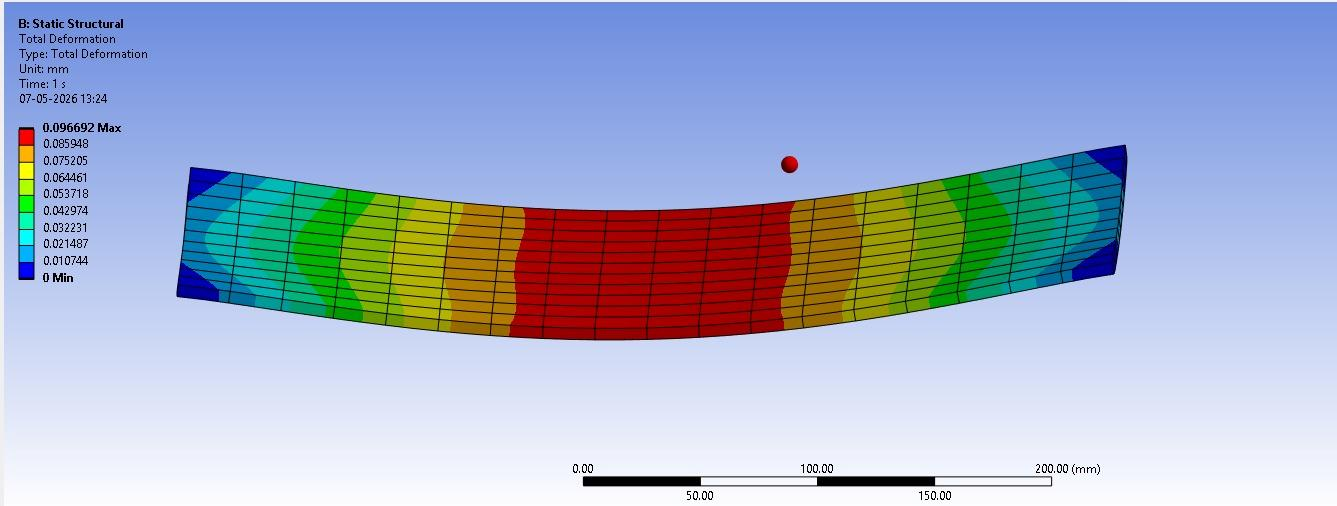
TOTAL DEFORMATION MAP ANSYS Total Deformation Map CLICK TO EXPAND 🔍
Total Deformation & Rigidity Check
Extremely low elastic deformation (< 0.12 mm) ensures absolute structural rigidity and prevents electronic board flexing.
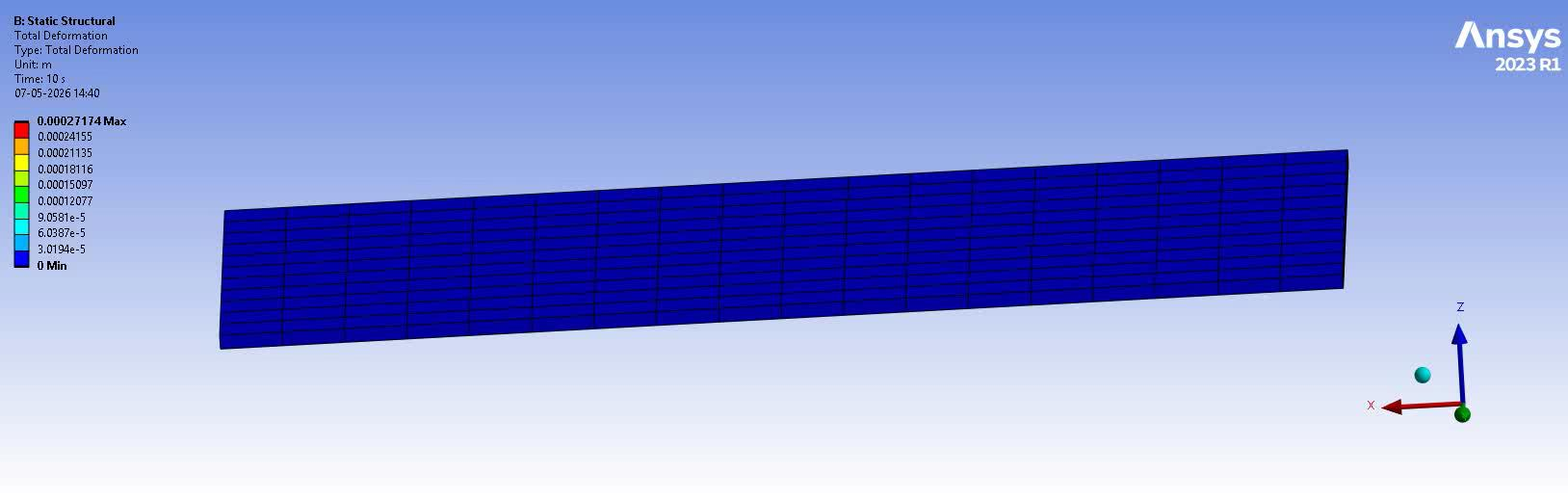
DIRECTIONAL DEFORMATION Directional Deformation Analysis CLICK TO EXPAND 🔍
Directional Axis Displacement
Verifies minimal longitudinal sag and zero torsional warping across opposing wheel stations during obstacle impact.
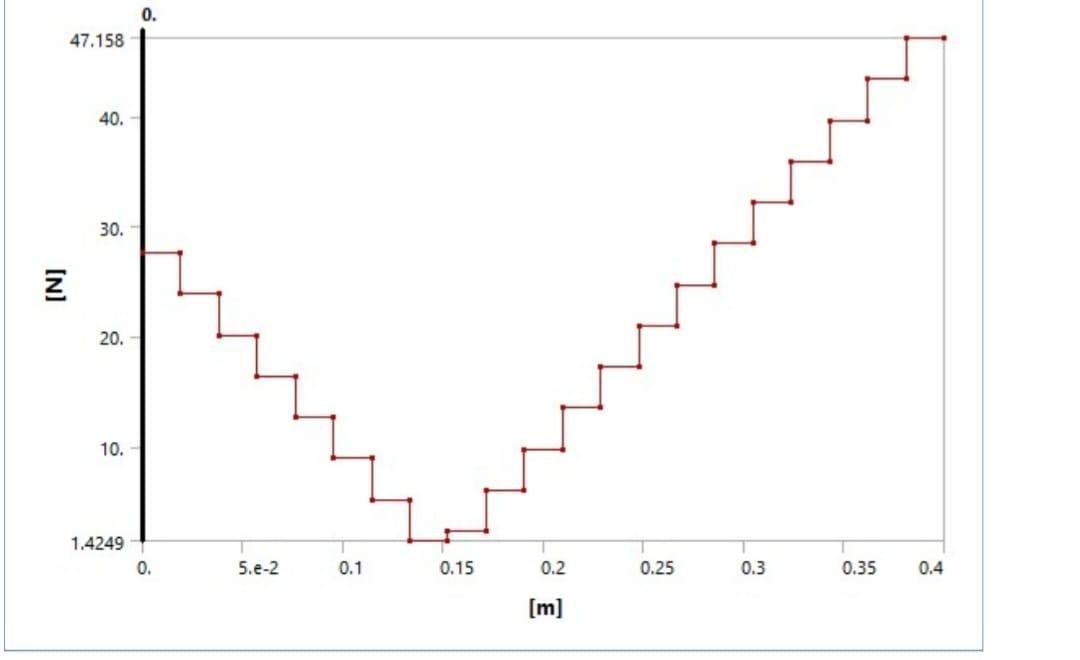
SFD & BMD DISTRIBUTION Shear Force and Bending Moment Diagram CLICK TO EXPAND 🔍
Shear Force & Bending Moment Validation
Bending moment peaks at central payload zone are countered by longitudinal rib reinforcement in the lower chassis tier.
📊 FEA Simulation Findings & Yield Margins
MAX LOCALIZED STRESS < 45 MPa (Concentrated at wheel arm bracket fillets)
MATERIAL YIELD LIMIT 503 MPa (Al 7075-T6)
FACTOR OF SAFETY (FoS) > 4.2× (Safe against unexpected obstacle shock loads)
MAX TOTAL DEFLECTION 0.118 mm (Zero interference with sensor/mast alignment)
🔬 Structural Optimization Insights

The FEA simulation affirmed that the two-compartment rib framework significantly enhances torsional stiffness compared to flat plate designs. Teammate Divyansh Tanwar executed the ANSYS solver passes, which directly validated my CAD rib placement and 40 mm shaft diameter calculations.

Multi-Sensor Telemetry & Autonomous Reconnaissance Architecture

End-to-end integration of optical reconnaissance, 360° laser mapping, satellite positioning, and encrypted remote communication to enable 24×7 unmanned border surveillance.

HARDWARE / IOT / SOFTWARE
// 360° TIME-OF-FLIGHT LIDAR SWEEP & AUTONOMOUS INTRUSION TARGETING
SYSTEM SUBSYSTEMS ARCHITECTURE UGV System Architecture CLICK TO EXPAND 🔍
LiDAR Laser Sensor RANGE & SLAM

Performs 360° time-of-flight laser distance measurement, creating real-time 2D/3D point clouds for obstacle avoidance and terrain contour mapping.

PIR & IR Motion Sensors MOTION DETECTION

Monitors perimeter infrared signatures to detect unauthorized human infiltration, wildlife, or vehicular movement in complete darkness.

RGB + IR Dual Camera OPTICAL & THERMAL

High-definition dual-spectrum camera feeding optical situational awareness during daytime and thermal reconnaissance at night.

GPS Navigation Module GEOLOCATION

Provides precise satellite waypoint tracking, autonomous route patrol geofencing, and accurate coordinates of detected border anomalies.

Wi-Fi & RF Telemetry WIRELESS LINK

Long-range wireless protocol communicating with central command post, streaming video feeds and transmitting automated email alerts.

Raspberry Pi 4 Controller CENTRAL CPU

Onboard computing brain processing sensor fusion algorithms, computer vision triggers, and PWM motor driver signals.

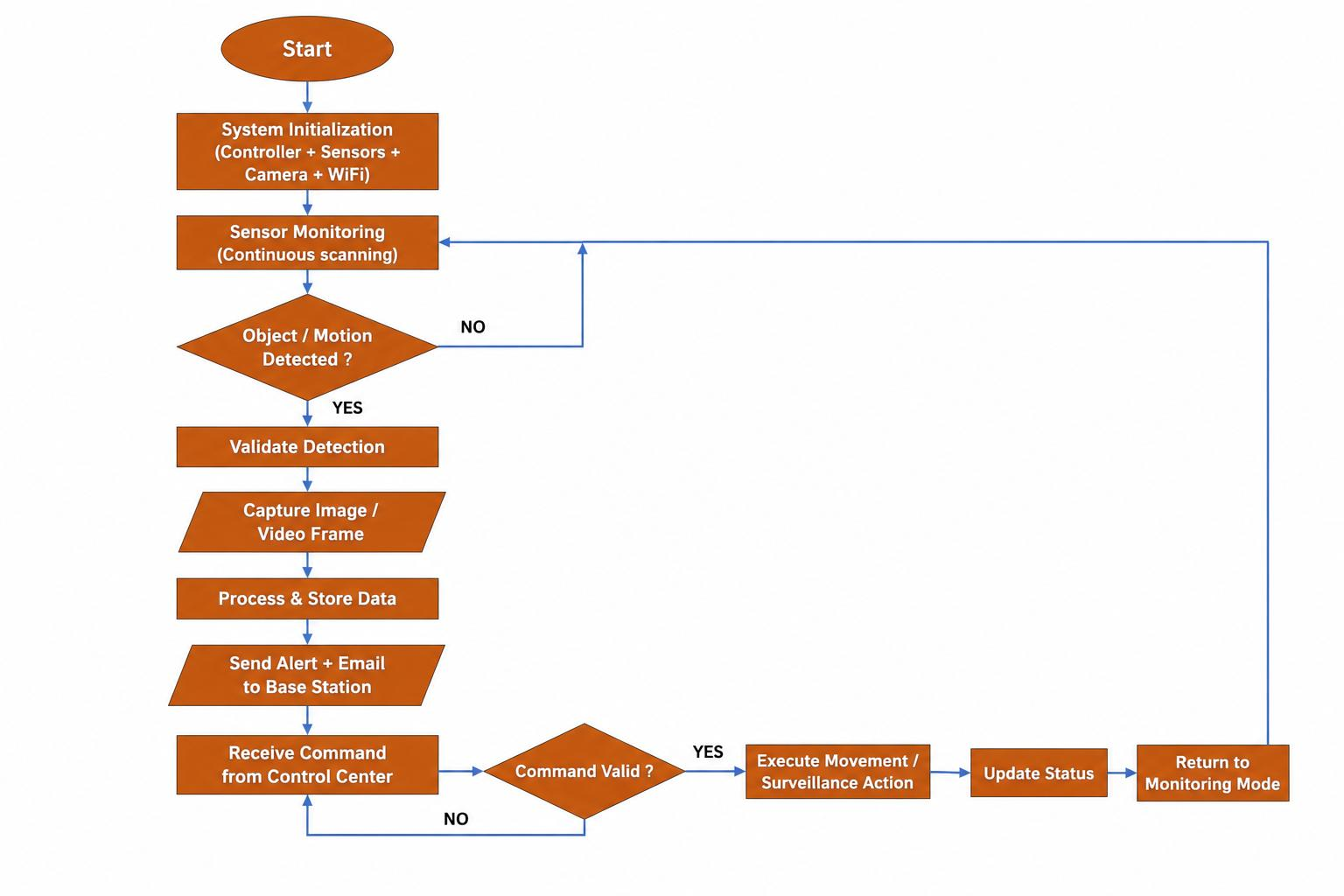
Autonomous Surveillance & Response Pipeline
STAGE 01 Autonomous Patrol Navigates predefined GPS boundary waypoints
STAGE 02 Perimeter Scan LiDAR & IR sensors continuously sweep terrain
STAGE 03 Intrusion Trigger PIR detects thermal motion anomaly
STAGE 04 Optical Capture Camera locks on target and captures snapshot
STAGE 05 Telemetry Alert Encrypted image + GPS sent to base station
STAGE 06 Command Action Operator verifies threat and commands motors
Engineering Trade-Off Analysis & Research Benchmarking

Comparative analysis of powertrain architectures, locomotion mechanisms, and existing literature (Rakshak UGV, ICECCME Modelling Studies) that justified our design choices.

LITERATURE & TRADE-OFF STUDY
1. Powertrain Architecture Evaluation
Powertrain Type Endurance Acoustic Noise Mechanical Complexity Primary Application Selection Status
Battery Electric (Li-Ion) 1 — 3 Hours Ultra-Low (Silent) Low (Direct DC Drive) Covert reconnaissance, short patrols SELECTED FOR UGV-01
Hybrid Diesel-Electric 10 — 20 Hours Medium / High Medium (IC Engine + Generator) Heavy military logistics & convoy support EXCLUDED (ACOUSTIC SIGNATURE)
Hydrogen Fuel Cell 20+ Hours Low High (Cryogenic tanks & stacks) Experimental deep remote missions EXCLUDED (COST & COMPLEXITY)
2. Locomotion Configuration Comparison
Locomotion Type Mechanical Complexity Control Complexity Maneuverability Power Efficiency Evaluation
4-Wheel Differential Drive Low Low High (Zero Turn Radius) High OPTIMAL (High Efficiency & Agile)
Tracked / Tank Drive Medium Low Low (High Scrub Friction) Low High friction losses in loose sand
Legged / Quadruped High Medium / High High Medium Excessive actuator mass & cost
Hybrid (Wheeled-Legged) High High High Medium Over-complex for surveillance goal
3. Literature Research Benchmarking
Research Study Core Focus Control Method Simulation Approach Our Project Implementation
Rakshak Modular UGV [1]
Cognitive Robotics 2023
Modular architecture for logistics & border surveillance Embedded + ROS ROS + Real-time field trials Adopted modular 2-compartment packaging & sensor array
Electromechanical Modelling [12]
IEEE ICECCME 2021
Mathematical link between input voltage, sinkage & torque PD Controller Mathematical dynamic simulation Utilized 3 N·m motor torque foundation & traction modeling
Mobile Surveillance Robot [14]
ICCAS 2007
Pan-tilt camera stabilization on rough terrain PID + Active Gimbal ADAMS + MATLAB Co-Simulation Integrated low-vibration chassis mounting for optical clarity
CLEAN ENERGY & OPTIMIZATION REAL-TIME TILT TRACKING CLEAR-SKY SOILING TELEMETRY DECISION TREE ML REGRESSION OPENWEATHERMAP API

AI-Based Solar Panel Efficiency Maximizer

AUTOMATED TILT TRACKING, DUST SOILING MONITORING & SMART MAINTENANCE TELEMETRY — TEAM OF 4
LEAD ML & PIPELINE ARCHITECT
Engineered full computational pipeline in Python: real-time weather API integration, Clearness Index (Kcs) dust-vs-cloud discriminator, Decision Tree Regressor optimal angle prediction, and automated maintenance alert telemetry.
PEAK EFFICIENCY 97.0% TARGET
ML REGRESSOR MODEL Decision TreeREGRESSOR
CLEAR-SKY THRESHOLD 0.80Kcs
MAINTENANCE CUTOFF 80.0% η
SYSTEM ARCHITECTURE Low-BudgetPYTHON API
Dynamic Sun-Tracking Geometry & Multi-Axis Mount Architecture

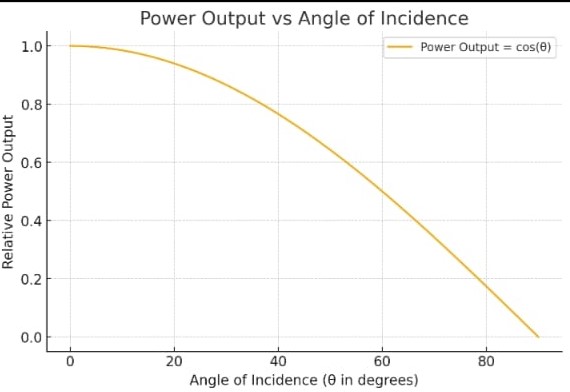
Engineered an automated tracking mechanism that continuously maximizes normal incidence irradiance by adjusting the panel tilt angle θ relative to the instantaneous solar elevation, governed by Lambert's cosine law P(θ) = Pmax · cos(θ).

3D SUN-TRACKING CAD STAGE
☀ 3D Interactive Sun-Tracking Simulator & Cosine Irradiance Ray Tracing
SUN ANGLE: 60° OPTIMAL TILT: 30° cos(θ) FACTOR: 1.00 SYSTEM EFFICIENCY: 100%
// SIMULATED SUN PATH ARC & COSINE NORMAL RAYS
12:00
Tilt Actuation Engine ANGLE
Predicts and sets optimal hourly tilt angles based on solar elevation angles derived from ephemeris equations and weather telemetry.
Dust Soiling Monitor SENSOR
Clearness index (Kcs = GHI / GHIcs) reliably isolates light attenuation caused by airborne dust from natural cloud transits.
Predictive Maintenance ML ALERTS
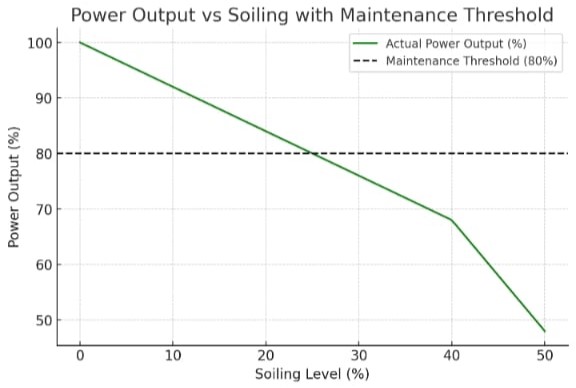
Triggers automated cleaning and service notifications whenever instantaneous panel efficiency drops below the 85% operating threshold.
Python Mathematical Derivations & Live Interactive Simulator

Core mathematical formulations and machine learning regression algorithms implemented in Python to model irradiance, estimate output yields, compute clearness indexes, and issue automated maintenance alerts.

4 CORE DERIVATIONS + LIVE SIMULATOR
Efficiency Ratio Calculation EQ 01
η = ( Pactual / Pexpected ) × 100% where Pexpected = f(GHI, Temp, θtilt)
Condition: If η < 85% → Automated Cleaning Alert Triggered
Quantifies performance degradation in real-time by benchmarking delivered power against theoretical clear-sky output.
Clear-Sky Clearness Index EQ 02
Kcs = GHI / GHIcs GHI = Global Horizontal Irradiance (W/m²)
Threshold: Kcs < 0.80 flags significant cloud / dust attenuation
Distinguishes atmospheric cloud shading from physical dust layer soiling by correlating satellite weather GHI against ground sensors.
Lambert's Cosine Irradiance Law EQ 03
P(θ) = Pmax · cos(θ) θ = |θtilt − (90° − θsun)|
Peak: θ = 0° (Normal Incidence) → cos(0°) = 1.000 (100% Yield)
Governs the geometric relationship between sunlight vector and photovoltaic surface normal, driving the tracking optimization loop.
Mean Absolute Error (MAE) EQ 04
MAE = ( 1 / n ) · ∑ |yi − ŷi| yi = Actual Yield, ŷi = Decision Tree Prediction
Model: Scikit-Learn DecisionTreeRegressor (MAE < 2.4 W)
Loss function used to evaluate and tune the Decision Tree Regressor for optimal tilt angle prediction across seasonal weather profiles.
01 Weather API Pulls temp, cloud cover & GHI via OpenWeatherMap JSON
02 Power Estimate Calculates theoretical clear-sky yield Pexpected
03 Clearness Index Kcs separates cloud transit from physical dust
04 Decision Tree ML regressor recommends optimal tilt angle θ*
05 Efficiency Analysis Compares η against 85% operating baseline
06 Telemetry Action Outputs tilt actuation command & cleaning alerts
AMBIENT TEMPERATURE (°C) 35°C
CLOUD COVER SHADING (%) 20%
DUST SOILING LAYER LEVEL (%) 20%
PANEL TILT ANGLE (°) 40°
EFFICIENCY GAUGE
EXPECTED CLEAN POWER 256.00 W
ACTUAL DELIVERED POWER 204.80 W
SYSTEM EFFICIENCY (η) 80.00%
CLEAR-SKY INDEX (Kcs) 0.80
DECISION TREE OPTIMAL TILT 40°
DIAGNOSTIC STATUS ⚠ CLEANING REQUIRED
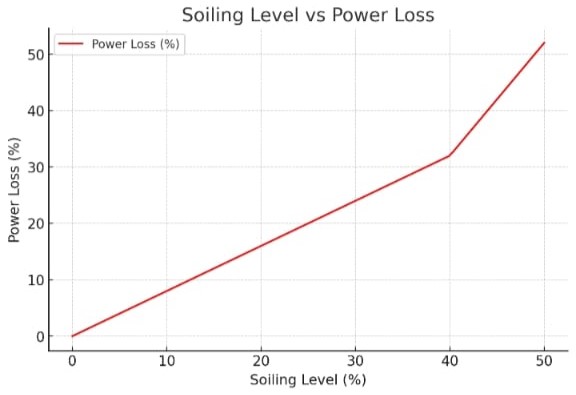
Soiling Degradation Analysis, Graphs & Fault Resolution Matrix

Empirical investigation of particulate dust accumulation on photovoltaic performance, power degradation thresholds, and fault mitigation strategies digitized from report data.

EXPERIMENTAL DATA + CASE STUDY
PROBLEM / PHENOMENON PROPOSED SOLUTION PHYSICAL & ML MECHANISM DECISION / ACTION
Sub-Optimal Tilt Angle AI model predicts optimal tilt every hour Sun path ephemeris tracing in local geographic coordinates Continuous Actuation
Dust Accumulation (Soiling) Light sensor comparison + Kcs index Irradiance attenuation pattern detection without false cloud triggers Cleaning Alert (<85%)
Power Loss due to Clouds Weather API pulls GHI & cloud data ML model differentiates uniform cloud shading from localized soiling Adjust Tilt to Diffuse
Shadow Shading of Objects Manual shadow mapping + AI layout advice Geometric ray tracing + historical daily sunlight loss datasets Relocation Advice
High Temperature Derating Continuous panel temperature monitoring Semiconductor bandgap voltage derating coefficient (0.4%/°C) Cooling Alert (>50°C)
AMBIENT TEMPERATURE: 35.0 °C
CLOUD COVER RATIO: 20.0 %
THEORETICAL CLEAN POWER OUTPUT: 256.00 W
ACTUAL MEASURED POWER (WITH DUST LAYER): 204.80 W
SYSTEM EFFICIENCY (η): 80.00 %
CLEAR-SKY INDEX (Kcs): 0.80
RECOMMENDED PANEL TILT ANGLE: 40°
TELEMETRY DIAGNOSTIC ALERT: ⚠ CLEANING RECOMMENDED — EFFICIENCY DROPPED BELOW 85% BASELINE
Literature Review, Academic Benchmarking & Future Scope

Comparative analysis of our lightweight Python Decision Tree model against advanced academic literature benchmarks, demonstrating how affordability and accessibility can be achieved without sacrificing diagnostic accuracy.

5 ACADEMIC BENCHMARKS
STUDY / CITATION FOCUS DOMAIN METHODOLOGY REPORTED METRICS OUR IMPLEMENTATION
Murugesan et al. [1] Tilt & Power Optimization ANN + Ant Colony Optimization 98.80% Max Efficiency Adopted Tilt Tracking
Abubakar et al. [2] Short-Term Yield Prediction Deep Learning (LSTM / RNN / GRU) 97.00% (15 min to 2 hr) Simplified to Decision Tree
Gyawali & Dhablia [10] Real-Time Tracking Systems ML + Computer Vision Dynamic Angle Correction Integrated Weather API
Raju et al. [12] Parameter Optimization Genetic Algorithms (GA) +15% Efficiency Boost Adopted Parameter Sizing
Datategy [13] Predictive Fault Maintenance Temperature & Voltage Analytics 95% Failure Prediction Implemented η Alerts
★ Key Architectural Advantages
AFFORDABILITY Zero Cost — Replaces $5,000+ pyranometers with free OpenWeatherMap API
TRIPLE ENGINE Unifies angle optimization, dust detection & weather forecasting into 1 stack
HARDWARE AGNOSTIC Runs on Raspberry Pi / ESP32 or basic laptop Python environment
COMPUTE OVERHEAD Sub-10ms Decision Tree regression inference time
⚡ Python Software Architecture
import requests # OpenWeatherMap API pipeline
import numpy as np # Vectorized arrays
import matplotlib.pyplot as plt
from sklearn.tree import DecisionTreeRegressor
# Model Training: y = optimal_tilt, X = [temp, cloud, GHI]
model = DecisionTreeRegressor(max_depth=5).fit(X, y)
Deep Learning LSTM
Long Short-Term Memory neural networks for 48-hour forward solar yield forecasting.
Mobile App & Voice REACT UX
Cross-platform mobile application with voice assistant telemetry and live push alerts.
IoT Servo Actuation ESP32
Microcontroller-driven dual-axis worm gear actuator for fully automated solar tracking.
Cloud Solar Farm SCADA
Multi-megawatt centralized telemetry dashboard for commercial utility-scale solar farms.
—APPROACH

How I approach
engineering.

SIX-STAGE PROCESS / CLICK TO EXPAND
01
Understand
Define the problem, constraints and operating conditions before touching CAD.
02
Model
Build the CAD geometry — chassis, assemblies, component layout.
03
Calculate
Derive loads, forces and power requirements from first principles.
04
Analyze
Check the numbers against the geometry and operating scenario.
05
Optimize
Refine dimensions, mass and component selection for the target performance.
06
Validate
Cross-check results and, where needed, hand off for structural analysis.
04INDUSTRIAL EXPOSURE

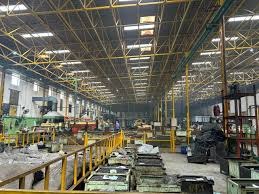
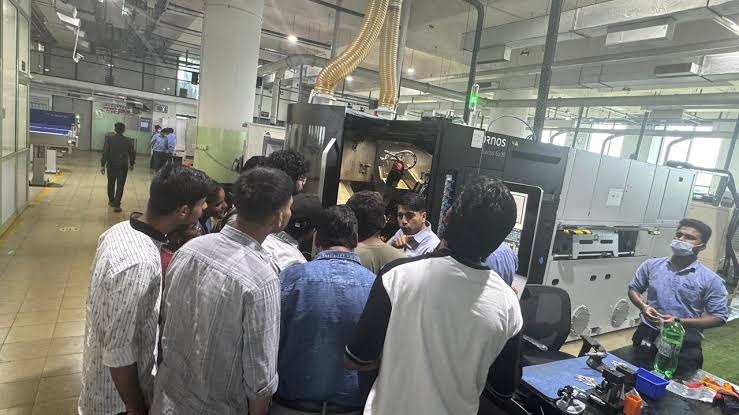
Observed on
the manufacturing floor.

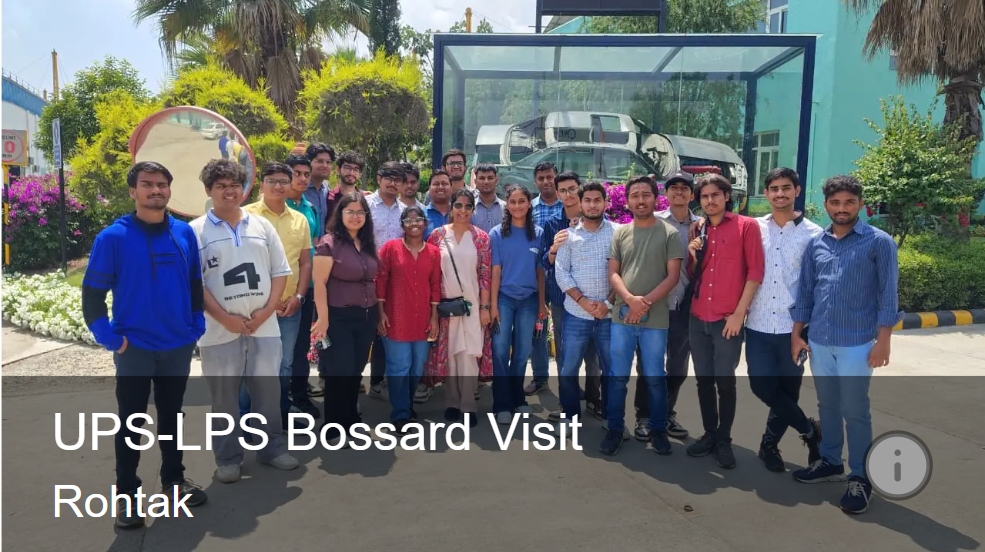
UPS-LPS BOSSARD, ROHTAK / FASTENER MANUFACTURING & PRECISION TURNING
UPS Lakshmi Fasteners Logo
UPS-LPS Bossard Fasteners Ltd.
ROHTAK, HARYANA / PRECISION FASTENER MANUFACTURING PLANT
COLD HEADING THREAD ROLLING SWISS CNC TURNING HEAT TREATMENT OPTICAL SORTING
Key Observational Takeaways

During the observational visit to UPS-LPS Bossard (Rohtak), I examined the complete production lifecycle of industrial fasteners — from raw coiled wire rods to precision-threaded, heat-treated, and surface-coated finished fasteners.

01 High-Speed Cold Forming: Studied multi-station cold heading dies that plastically deform alloy steel wire into bolt heads in milliseconds without chip generation.
02 Thread Rolling vs Cutting: Observed rotary cylindrical dies rolling threads into blanks, preserving continuous grain flow for superior fatigue strength compared to cut threads.
03 Automated Quality Telemetry: Inspected high-speed optical camera sorting systems and eddy current crack detectors operating at hundreds of parts per minute.
01 RAW MATERIAL
WIRE DRAWING & PHOSPHATING
02 COLD HEADING
MULTI-STATION PROGRESSIVE FORGING
03 THREAD ROLLING
ROTARY DIES & GRAIN CONTINUITY
04 HEAT TREATMENT
AUSTENITIZING, QUENCH & TEMPER
05 SURFACE COATING
ZINC FLAKE / ELECTROPLATING
06 OPTICAL SORTING
100% VISION CAMERA & EDDY CURRENT
05EDUCATION

Timeline.

ACADEMIC RECORD
2024 — 2028
NIT Delhi
B.Tech Mechanical Engineering · Minor in AI/ML
CGPA 8.04 / 10
2024
Class XII
88%
2024
JEE Main
Ranked among the top 2% of candidates
—EXTRA-CURRICULAR

NCC Cadet.

NIT DELHI
National Cadet Corps (NCC) Official Emblem

Regular training, parades and camps as an NCC Cadet at NIT Delhi, alongside serving as a member of the Event Disciplinary Committee.

TrainingParadesCampsEvent Disciplinary Committee
—CONTACT

Let's build
something.

OPEN TO OPPORTUNITIES

Reach out about mechanical design work, CAD projects, or engineering collaborations.